

7 Types of Construction Nails and Their Uses: A Complete Buying Guide
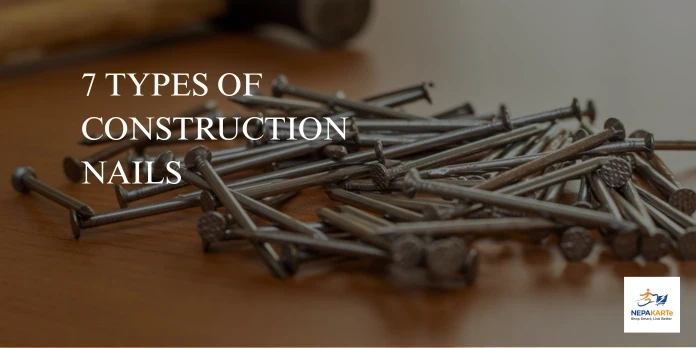
Construction nails are specially engineered nails designed for the assembly of wood, concrete, roofing materials, and other construction elements in residential, commercial, and industrial structures. It is essential to know the different types of construction nails, as they have different uses to help enhance the quality of the construction, its strength, and durability.
Construction nails come in a variety of shapes, sizes, materials, coatings, and holding powers. Common nails are used for all general framing, roofing nails for shingles, and masonry nails for concrete and brick. Getting the right nail will make your construction last longer, reduce damage to the material, and create a stronger bond.
Construction nails come in various varieties depending on the requirements of the construction project, whether it is for construction professionals, carpenters, contractors, or do-it-yourselfers. Not only will this get the job done better, but it will also minimize the likelihood of loose joints or rust and early repairs. The National Association of Home Builders (NAHB) states that effective fastening techniques are a significant part of the structural strength and durability of residential structures.
This complete nail guide discusses the 7 most popular nail construction types, features, sizes, materials, and considerations for purchasing nails.
What are construction nails?
A construction nail is a type of fastener that can form reliable and strong connections among construction materials.
Construction nails are very popular fastening products in construction due to their ease of installation, low cost, and a wide range of designs. Construction nails are specifically designed to resist a variety of material, environmental, and structural loads compared to general-purpose nails.
There are three main components of any construction nail: the nail head, the nail shank, and the nail point. All the components are responsible for the function of the nail. The head gives a good grip, the shank gives holding strength, and the point makes smooth penetration into the material. These features provide secure fastening for different building applications.
Construction nails are made out of carbon steel, galvanized steel, stainless steel, aluminum, and copper. Other nails have protective coatings to increase their corrosion resistance; these nails are appropriate for outdoor use and humid climates. Standardized fastener specifications, according to ASTM International, can help ensure consistent performance, quality, and safety on construction projects.
What are the main parts of a construction nail?
Each construction nail has 3 vital parts which affect its strength and performance.
-
Head: The impact of the hammer or nail is transmitted through the head, which secures the material in place.
-
Nails are composed of a number of parts: Shank: The main body of the nail that accounts for the majority of its holding power and pull-out resistance.
-
Point: The pointed end will find access in wood, masonry, or other materials without much resistance.
Variations of these components may be used to enhance performance for particular applications in the various types of construction nails. Roofing nails, for instance, have wider heads, and masonry nails have hardened tips for masonry work.
Why is choosing the right construction nail important?
The appropriate selection of the construction nail will help to enhance the strength, safety, durability, and quality of a construction project.
There is a wide variety of nails, and none of them are appropriate for the same job. The incorrect use of construction nails can compromise the holding ability, harm building materials, or cause eventual failure. Choosing the right nail makes sure that all connections work how they're supposed to.
There are various materials used in construction projects, including hardwood, softwood, plywood, concrete, brick, drywall, and roofing sheets. Different materials have their own type of nails in terms of length, shank thickness, head type, and protective coating. Selecting the right fastener also contributes to lower maintenance expenses and subsequent reliability.
Organizations, like the American Wood Council, have been providing guidance to the industry that the right fastener is critical to making a safe and long-lasting structural connection in wood construction.
Why do professionals carefully select construction nails?
However, construction nails are not only chosen for looks but for performance, durability, and project needs.
The right nail offers a number of key benefits:
-
Promotes better structural interactions among building materials.
-
It decreases the danger of splitting and surface damage to the wood.
-
It increases resistance to moisture and corrosion outdoors.
-
It aids in the project's plan to achieve the required quality and durability.
-
It reduces the cost of repairs due to fastening failures.
Choosing the right kind of construction nails from the start can lead to better workmanship, time, and cost savings.
What are the 7 most common types of construction nails?
Common nails, box nails, framing nails, finish nails, roofing nails, masonry nails, and galvanized nails are the seven most popular types of construction nails.
Most types of residential, commercial, and light industrial construction projects fall under these seven categories of construction nails. There are a variety of nail types, each with specific attributes appropriate to specific uses, materials, and environments. If builders and homeowners are aware of these variations, they can select the best fastener for the job, rather than a one-size-fits-all remedy.
Construction Nail Comparison Table
|
Nail Type |
Best Used For |
Holding Strength |
Indoor/Outdoor |
|
Common Nails |
General framing and structural woodwork |
High |
Both |
|
Box Nails |
Light framing and thinner wood |
Medium |
Indoor |
|
Framing Nails |
Structural framing and load-bearing work |
Very High |
Both |
|
Finish Nails |
Trim, molding, and cabinetry |
Medium |
Indoor |
|
Roofing Nails |
Asphalt shingles and roofing felt |
High |
Outdoor |
|
Masonry Nails |
Concrete, brick, and block |
Very High |
Outdoor |
|
Galvanized Nails |
Outdoor and moisture-prone projects |
High |
Outdoor |
What are common nails used for?
Common nails are the most popular nails used in construction as they are very strong for general construction uses.
Common nails have a thick shank, large flat head, and sharp diamond point. They are able to make powerful connections in framing, subflooring, decking, fencing, and in other wood construction functions in this design. They are known for their durability and are commonly used in construction projects where durability is a key concern.
Common nails are versatile and one of their benefits. They can be used on a variety of lumber types and come in a variety of lengths and diameters, and can be used for any type of project from small repair work to large building projects. They also have a thicker shank, which offers great shank bending resistance during installation.
Key features of common nails
-
Superior holding strength with a thick shank.
-
For secure fastening, the head is flat.
-
Different sizes available for different applications.
-
Appropriate for general wood construction and wood framing applications.
-
Low cost and easily accessible.
What are box nails used for?
Box nails are used for lighter applications, when reducing wood splitting is a priority.
Box nails are similar in shape to common nails, but they have a narrower shank. The smaller diameter helps them to fit into thinner logs or boards, reducing the stress on the surrounding wood fibers, which makes them a great choice for lighter lumber, softwood, and interior carpentry.
Box nails offer only slightly less holding power than common nails, but they offer better protection against cracking fragile items. This makes them versatile for light framing, wooden boxes, shelving, and woodworking projects.
Box nails are an essential part of the various construction nails used in today's building and are known for their strength and minimal splitting properties.
What are framing nails used for?
A framing nail is a heavy-duty nail used in wood construction and for heavy-duty work.
One of the strongest nails used on residential and commercial construction projects is a framing nail. They are also different by having a thick shank and a bigger head that will hold structural lumber during heavy loads. Nails are typically driven into place with a pneumatic framing nailer, which is preferable for contractors on large projects.
They are used for framing nails in wall frames, floor joists, roof trusses, decks, and wooden support structures. They have stronger holding power and help stabilize a building, which helps to prevent the failure of fasteners over time. The American Wood Council (AWC) says that specifying the right structural fasteners is key to safe, durable wood-frame construction.
Key features of framing nails
-
Thick shank ensures great holding power.
-
Ideal for use in structural framing and heavy-duty construction.
-
Works with manual hammers and framing nail guns.
-
Smooth, ring shank, or screw shank.
What are the uses of finish nails?
Finish nails are used for decorative woodwork and interior work to achieve a clean, unseen finish.
Finish nails are not like framing nails; they have a small head that can be set into the wood with a nail set so it is to your advantage above the wood surface. That makes them one of the most popular types of construction nails for projects that need to look as well as perform.
The finish nails are typically used to mount trim, baseboards, crown molding, window casings, cabinets and furniture. They can't match the strength of framing nails, but they offer a beautiful, professional finish that leaves few nail holes visible.
Common applications of finish nails
-
Adding ornamental trim and moldings.
-
Repairing door keys and window sills.
-
Assembling cabinets and furniture.
-
Interior finishing projects.
What do the roofing nails do?
Roofing nails can be used to attach roofing materials and withstand the harsh outdoor weather.
Roofing nails have a large flat head that spreads the pressure evenly among roofing materials and reduces the tearing of roofing shingles or roofing felt. Galvanized are many roofing nails, which offer extra protection against rust and can be used outdoors for a long time.
These nail types can be used in a variety of roofing applications, including asphalt shingles, roofing felt, waterproof membranes, etc. In areas with high humidity or frequent rainfall, it's particularly crucial to select corrosion-resistant roofing nails.
The National Roofing Contractors Association (NRCA) states that employing corrosion-resistant fasteners greatly enhances the longevity and durability of roofing systems.
What are masonry nails used for?
Masonry nails are nails made of hardened steel, used to drill through concrete, brick, and masonry.
Masonry nails are unlike regular wood nails in that they are made of hardened steel to help resist the force needed to penetrate dense building materials. Fluted or square shanks provide better grip to anchor in concrete and brickwork.
They are often used to join wooden strips to concrete walls, to mount electric clips and to hang light fixtures on masonry walls. Their hardness must be given attention and should only be used where suitable, to prevent bending or damaging the nail.
What are galvanized nails used for?
Galvanized nails are coated with zinc to protect against rust and corrosion, making them ideal for outdoor construction.
Galvanized nails are one of the most weather-proof nails available for use in construction, as the zinc coating on the nails also protects them from corrosion. They are a great option for fencing, decking, exterior woodwork, roofs, and more.
In countries with high humidity and a lot of rain like Nepal, galvanized nails can be more durable than standard steel nails. Outdoor structures can have longer life spans and lower maintenance costs with the use of corrosion-resistant fasteners.
How do you choose the right construction nail?
The selection of the appropriate construction nail will be determined by the type of construction, the type of material, the size of the nail, and the environment.
With several types of construction nails available, selecting the right one can significantly improve the strength and durability of your project. Do not use the same nails for structural framing and decorative woodwork; use heavy-duty nails for structural framing and clean finish nails for decorative woodwork. Likewise, outdoor use needs corrosion-resistant fasteners that are able to survive the dampness and changing weather conditions.
When buying construction nails, take into account these points:
-
Fit the nail to the wood, plywood, concrete, or roofing material.
-
Select the right nail size, making sure it goes deep enough to provide a good grip.
-
Use corrosion-resistant nails such as galvanized nails outdoors and/or in humid areas.
-
Take into account the strength needed for the project based on whether it is structural or decorative.
-
Employ the correct nail head and shank to increase performance and installation.
The right kind of construction nails not only keep things safer, but they also help to minimize the need for repair work due to loose or damaged nails.
What construction nail sizes should you use?
The thickness of the material and strength of the connection determine the size of the construction nail.
Construction nails come in a variety of lengths and diameters, depending on the type of project and the intended use. In many countries, they use the traditional "d" (penny) system to designate the size of the nails, with larger numbers usually corresponding to longer nails. It is important to select the correct size so that it does not cause unnecessary damage to the material and provides a secure connection.
|
Nail Size |
Common Application |
|
4d-6d |
Common Application |
|
8d |
General framing and plywood work |
|
10d-12d |
Structural framing and flooring |
|
16d |
Heavy framing and load-bearing construction |
In general, the nail should be driven into the second piece of wood for maximum holding strength, by being driven at least two-thirds of its length into it.
What mistakes should you avoid when using construction nails?
By minimizing common installation errors, you can ensure that your construction project performs to its best potential and lasts as long as possible.
The best kinds of construction nails won't work if they are installed improperly. The wrong nail or the wrong way of using it can lead to weaker connections, harm of materials, and higher maintenance costs in the long run.
Some of the most frequent errors are:
-
Applying interior nails for exterior buildings when exposure to moisture results in rusting.
-
Choosing nails that are not long enough to offer sufficient holding power.
-
Framing for structure with finish nails.
-
Nailing too near the edges of the wood that can split.
-
Not following manufacturer's guidelines regarding the type of construction materials used.
The extra few minutes that are spent selecting and fixing the right nail will save money in the long term.
Construction nails vs. screws: Which should you choose?
Screws offer greater holding power for activities that may need to be taken apart later, whereas construction nails are more useful for strength and flexibility.
Both fasteners have similar functions, but they differ in their functioning when loaded. Construction nails mostly resist shearing and are suitable for framing and structural applications that allow for a minimal amount of movement. Screws, on the other hand, provide better pull-out resistance and are often employed in projects that may require disassembly in the future or in decking, cabinetry, and furniture.
Construction nails are still the nails of choice for most framing and structural applications due to their strength, speed of installation, and affordability.
Where can you buy quality construction nails in Nepal?
Buying nails from a reputable supplier guarantees uniformity, reliability, and durability of the product.
Selecting the type of fastener is not the only factor when you are choosing the right nails and fasteners – you can also choose quality fasteners when you have a big construction project to handle, or you are performing small repairs at home. A good supplier should have an extensive range of construction nails available, in different sizes, materials and finishes, to meet the needs of their construction customers.
In Nepakarte, you can find a wide range of types of construction nails and other hardware products. Nepakarte is a reputable multi-category hardware e-commerce platform in Nepal that simplifies the process of sourcing substandard and trusted Brands of construction materials. This facilitates builders and do-it-yourselfers to accomplish their building projects with confidence.
Recent Posts






Roof Insulation: Powerful Benefits for a More Comfortable Home



NEPAKARTe is a modern eCommerce platform dedicated to making online shopping simple, reliable, and accessible for everyone. We bring together a wide range of quality products from trusted Sellers & trusted Brands offering customers a convenient way to discover, compare, and purchase what they need all in one place.
Follow Us
Contacts
-
Address
Kuleshwor, Kathmandu.
-
Phone
+977-97052-46000
-
Email
My Account
Payment Partners

-
Address
Kuleshwor, Kathmandu.
-
Phone
+977-97052-46000
-
Email